Who This Guide Is For
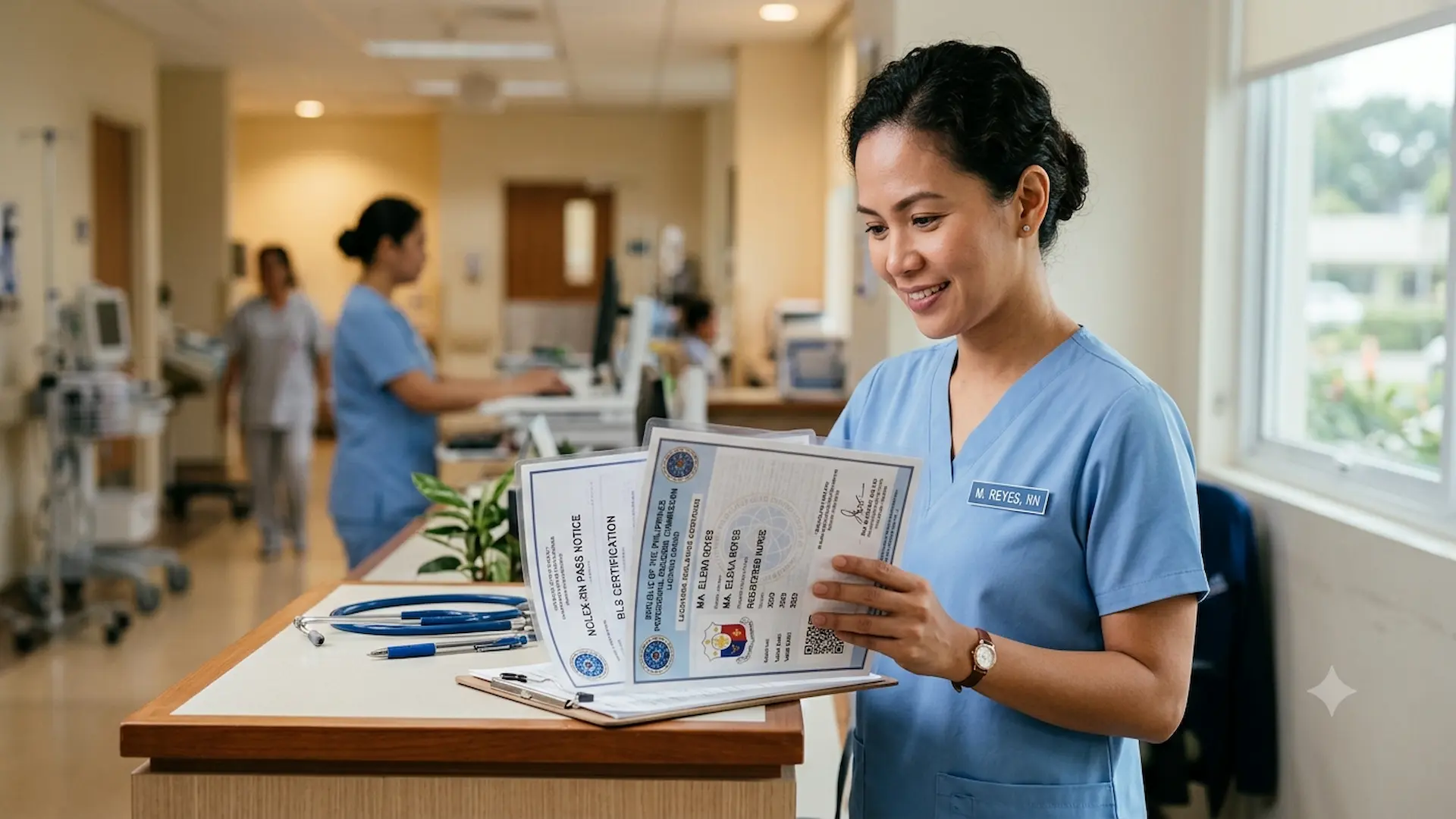
This guide is for Filipino nurses, caregivers, physical therapists, medical technologists, and other licensed health professionals planning to work abroad.
Healthcare workers face a more complex documentation path than most. Your PRC licence, clinical experience, and language certifications all need to be in order — and in some destinations, a formal credential-recognition process must be completed before you can legally practise. This guide walks through each layer in turn.
PRC Documentation
Your Professional Regulation Commission (PRC) licence is the foundation of any international healthcare application. Before anything else:
- Make sure your PRC licence is valid and current — renew if you're within six months of expiry
- Obtain a Certificate of Good Standing (COGS), confirming your licence is active with no disciplinary actions
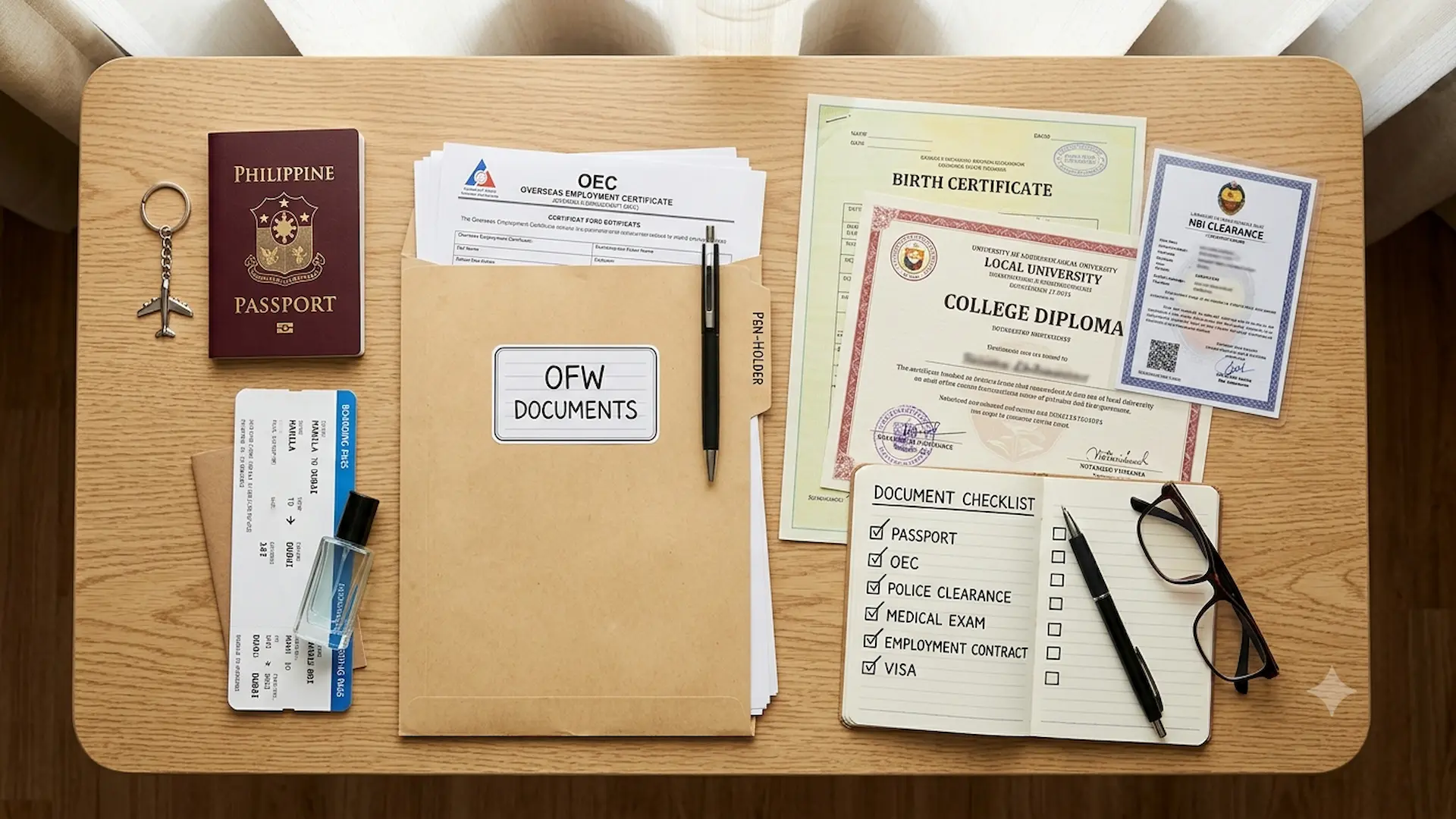
- Request an authenticated copy of your PRC licence — needed for overseas recognition processes
- Secure your Board Rating Certificate — some employers and authorities require your original examination score
The COGS is time-limited, so time its application to align with your planned deployment rather than securing it too early.
Language Requirements
Requirements vary by destination:
United Kingdom (NHS): IELTS Academic with a minimum of 7.0 overall and no sub-score below 7.0, or OET with Grade B in all four components.
Germany: German at B2 (CEFR) for most nursing roles, assessed through TestDaF or Goethe-Institut exams. Some employers accept B1 for structured care roles with a commitment to reach B2 within a set period.
United States: NCLEX-RN for registered nurses — a computer-adaptive licensing exam you must pass to obtain a state licence — plus CGFNS certification and an English test meeting the relevant state board's requirements.
Singapore and UAE: No mandatory language certification, but working-level English is expected and assessed during employer interviews.
Credential Recognition
Credential recognition is the process by which a destination country's regulator confirms that your Philippine qualification meets its national standards.
United Kingdom: Nurses apply to the Nursing and Midwifery Council (NMC), with a computer-based test and an OSCE. The full process can take many months, depending on your starting point.
Germany: Apply to the recognition authority (Anerkennungsbehörde) in the state where you'll work. It assesses your qualification against German standards and may require additional coursework or a supervised practice period before granting full equivalence.
United States: Apply for CGFNS certification, then to your target state board for NCLEX eligibility. Timelines vary by state.
Australia: Apply to AHPRA, the national health practitioner regulator. Straightforward applications tend to move faster than the European routes.
Across all of these, start recognition as early as possible. It's almost always the longest step, and paying more doesn't speed it up.
A Realistic Timeline
Using Germany as the example — among the most documentation-heavy common corridors for nurses:
Begin with language preparation and securing your PRC COGS and authenticated documents.
Submit your recognition application and continue language training toward B2.
Work through the recognition assessment while searching for an employer — many German hospitals recruit during this stage.
Once recognition is granted, apply for the work visa; if a compensation measure is required, arrange the supervised practice period.
Finally, sign the contract, complete DMW pre-departure processing, and deploy.
The Germany corridor is long. It's also among the highest-earning and most secure international nursing paths open to Filipino professionals — which is why many decide the effort is worth it.
Philore's healthcare team can advise on recognition for your specific qualification and destination, and help you map a realistic personal timeline.
Ready to hire?
Get a staffing plan built for your timeline.
Tell us your role, volume, and destination — we'll respond within 24 hours.